On Turning 40
Youth is no longer a descriptor of my identity. I can either mourn or celebrate that. Choosing the latter is what will open me up to the beauty this decade can yield.
Age is interesting because it’s both objective and subjective. Objective in the sense that it represents the number of times my physical frame has rotated around the sun. It’s quantifiable and governed by the law of entropy, which means that my body will show signs of this number that’s attached to my name. Shoulder pain, a few gray hairs, and some health issues are a few of the things that personally fall under this domain.
But on the other hand, there is a subjective definition as well. There is a psychological frame you can place around your age, which has the effect of making you feel like you’re younger or older than the number of orbits you’ve taken on this planet. This is common amongst adages like “40 is the new 30” or the belief that “you have an old soul.” While some use subjective age as a coping mechanism, the truth is that many people don’t feel like their objective age. There is something about the number that feels off to them, creating a gap between who they are and what they’re expected to be.
As I turn 40, I’ve been wondering if this is the case. Does the number 40 feel foreign, or does it feel like it’s exactly where I’m supposed to be? While I have an intuition as to what the answer is, the purpose of this essay is to help me understand that answer better through the avenue of reflection.

The first thing to consider is that by the time you hit 40, you’ve seen a good deal of hardship. While you may not have seen the most acute degrees of hardship you’ll ever experience, you will certainly understand why people say that life is hard. This is obvious for those that are struggling to survive, but even if you’ve achieved everything you’ve ever wanted, the ensuing boredom will become your new source of hardship. Straining our way through obstacles is a feature of life, and not the bug we mistakenly interpret it to be.
The beautiful tradeoff of facing obstacles, however, is that you learn valuable lessons. And the more lessons you learn, the less daunting each subsequent obstacle will be.
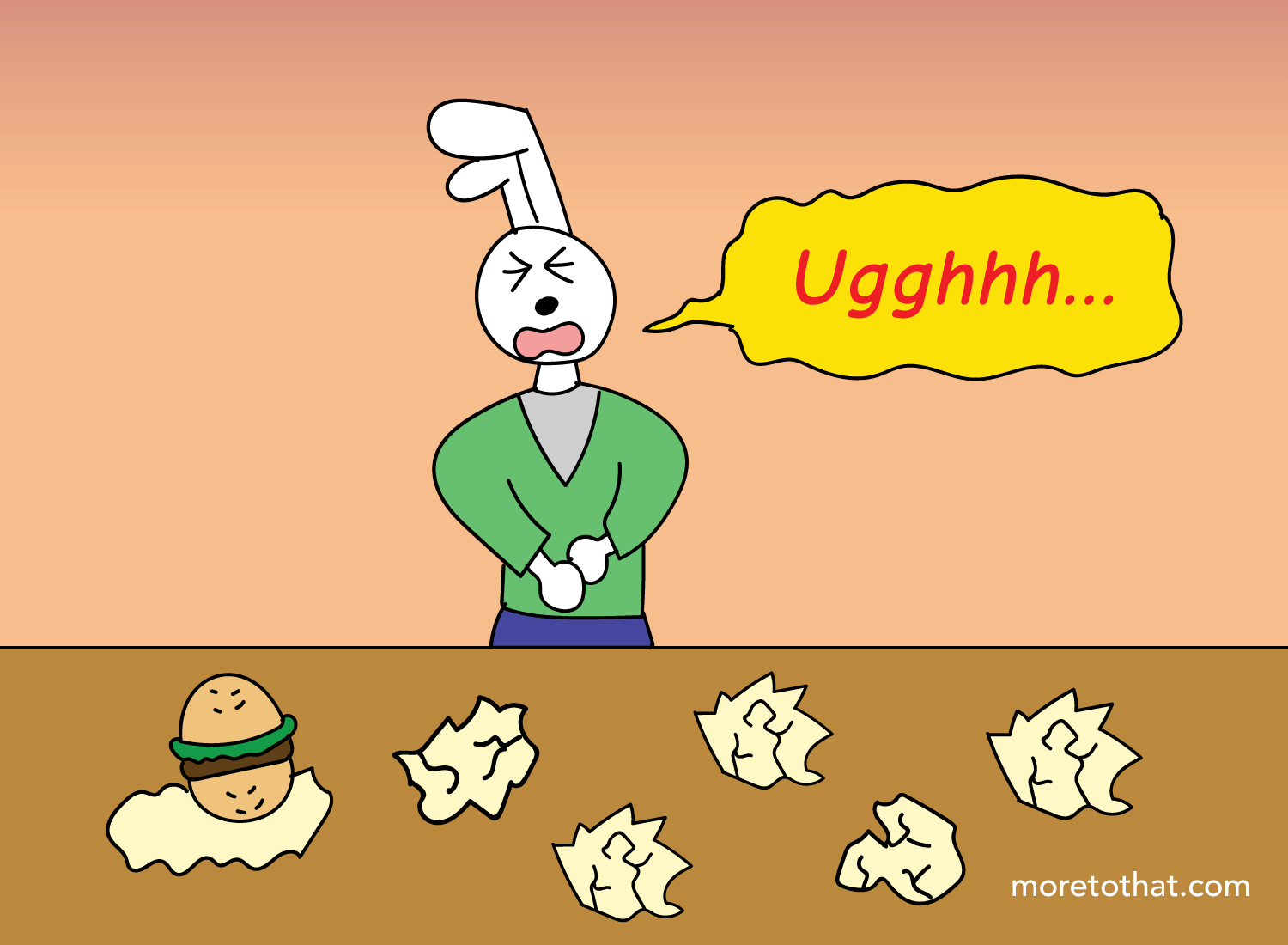
In economics, there is something called the law of diminishing marginal utility. Simply put, it states that for any commodity, you will derive lower levels of utility (or pleasure) with each additional unit you consume. For example, if you’re hungry and you buy a burger, that first one will be amazing. But if you buy another burger, then that one will be less pleasurable than the first. And by the 5th burger, you’ll hate yourself and won’t buy that burger again for the next month (at least).
When it comes to overcoming obstacles, however, I feel that there’s an inverse of this: a law of increasing marginal utility. With each obstacle you overcome, the utility comes in the form of a lesson you can import into the next obstacle you face. And once you overcome that one, the utility gained has a compounding effect that takes all the prior lessons into account as well.
This has the interesting effect of allowing calmness to be more of a baseline state as you’re introduced to various obstacles over time:
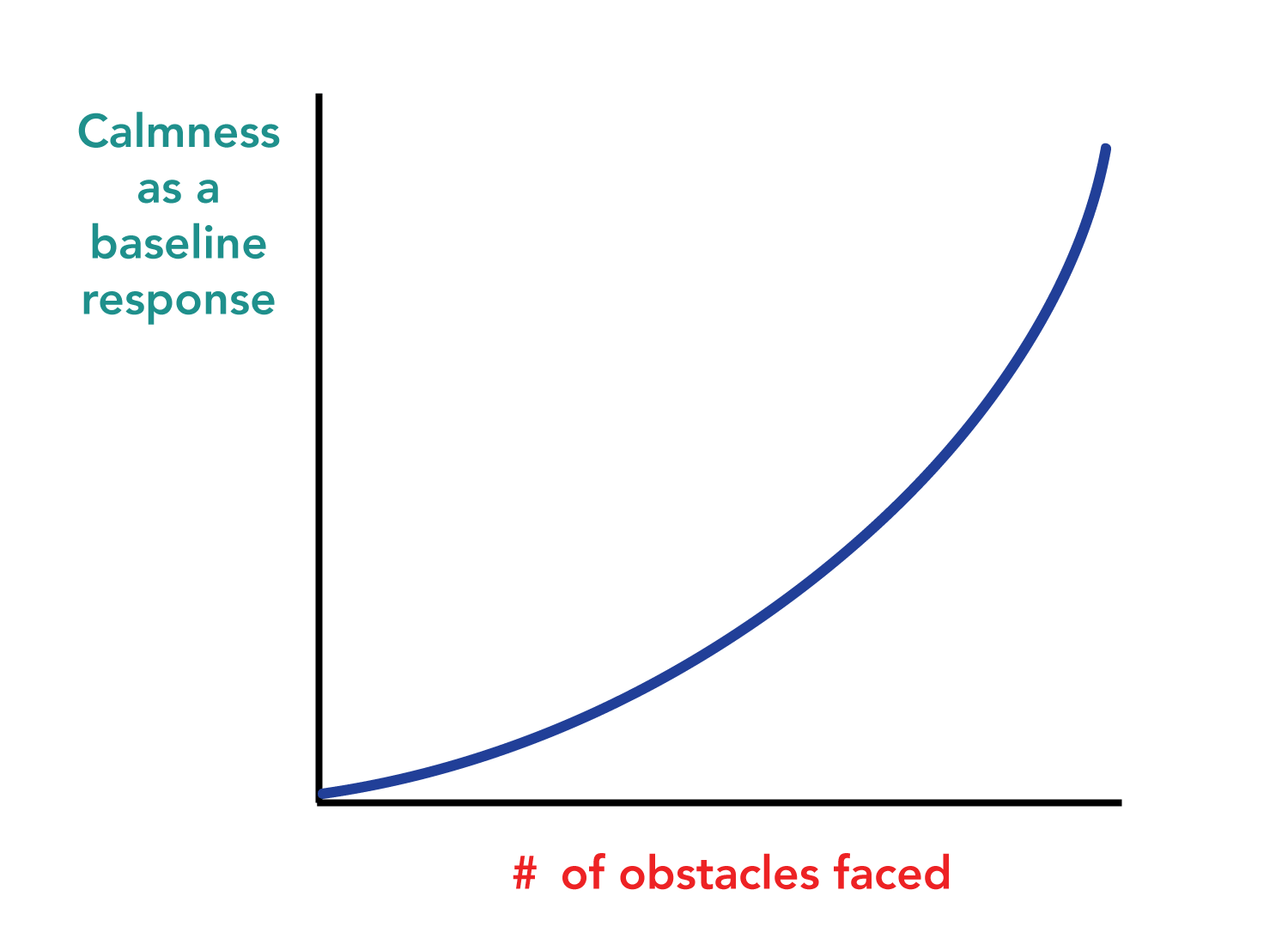
So while the first obstacle you faced in a given domain may have provoked a lot of anxiety, by the 30th one, you’ll know how to face it with equanimity.
I say all this because by the time you turn 40, you’ll definitely have had some experience with the above graph. You may not be at the uppermost part of the curve because that tends to be reserved for the elderly (many of whom have the ability to calmly face the greatest obstacle, which is death), but you’ll know what it’s like to roam around the middle of the arc. You will have faced trying times, but you also will have felt what it’s like to overcome them. This introduces a level of maturity that gives you more confidence to handle whatever may come next, knowing that in the long-run, disorder is inescapable.
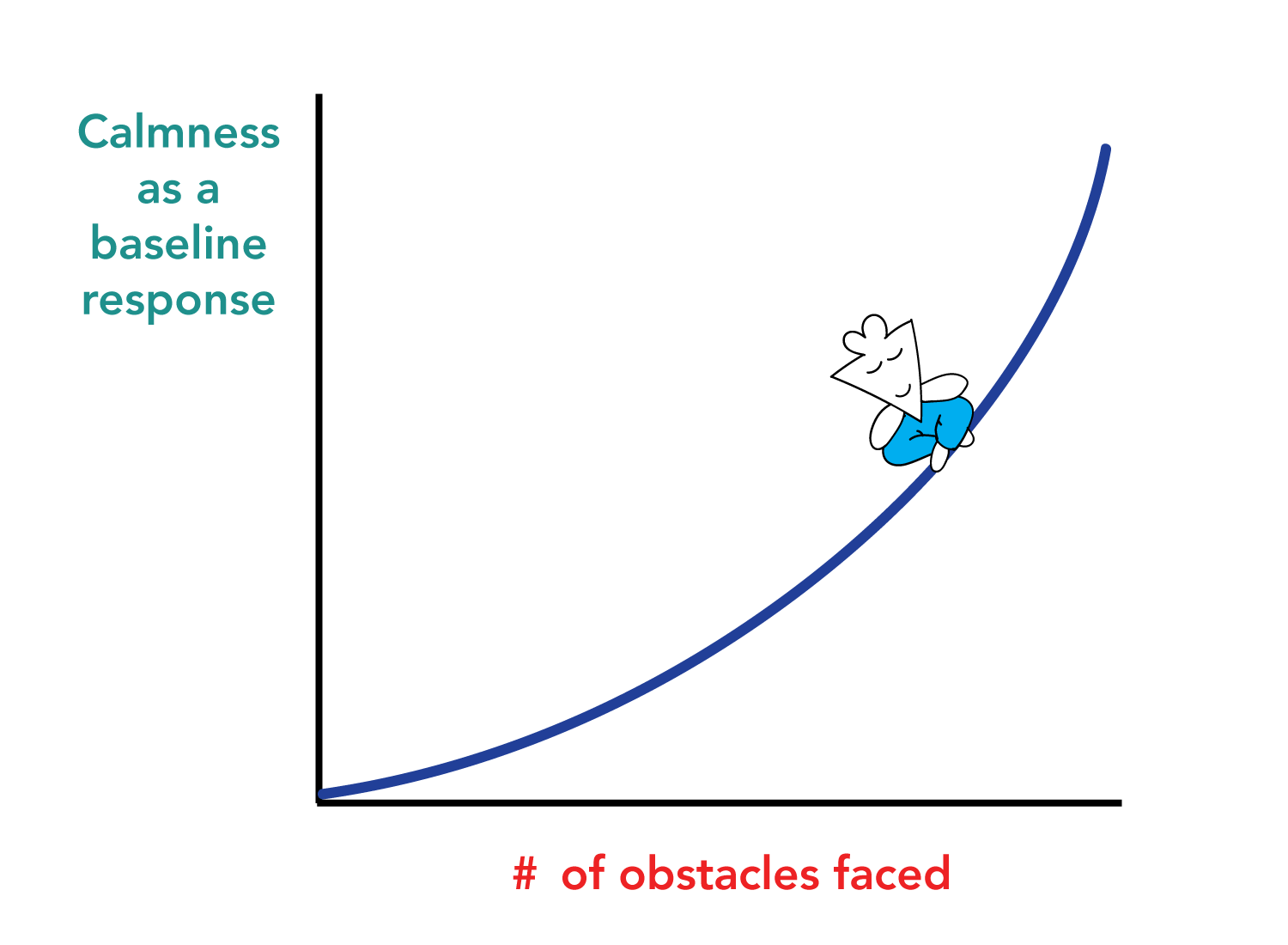
Now, it may sound rather disheartening to hear that one’s exposure to hardship is a feature of aging. But like most things in life, it comes with a beautiful balance. And in the case of turning 40, that balance comes from knowing what roots you want to deepen to cultivate a life of meaning and love.
In The Inner Compass, I wrote:
Let’s consider the three main factors that will have an outsized impact on your life:
1. Where you live,
2. What you work on, and
3. Who you’re with.You can get many things wrong, but if you get the above three right, your well-being will be high.
Ultimately, these 3 things all represent deep investments of both attention and trust. And the wonderful thing about age is that it filters out the superfluous and amplifies the necessary.
I’ll give you a personal example of this using the lens of the 2nd point: what you work on.
My journey as a writer didn’t really start until I was in my mid-thirties. I was initially concerned that I was too late to the domain of writing online, and that I had too many responsibilities on my plate to dedicate my full attention to it. This fear of uncertainty kept me in a job I disliked, where I did mind-numbing tasks for the sake of earning a steady paycheck.
But slowly and steadily, I started publishing stories and sharing them with others. Some of them received a great response, while others dwelled in obscurity. While there was no clear path to a viable living doing this, it became obvious to me that I at least had to try. Most people stay in jobs they dislike because they don’t know what else they’d dedicate their attention to. But I had the privilege of knowing exactly what that would be, so it seemed irresponsible to turn my back on that truth and to continue living a lie.
Years after taking the leap, I can confidently say that this is a career now. And as I turn 40, I want to continue deepening my relationship with the craft. Perhaps one of the greatest gifts of turning 40 is that you have a better understanding of what you want, which usually isn’t the case when you’re swimming in the fountain of youth. The fountain is a crowded one, and your desires are largely formed by whoever seems to be in its upper tiers. But as I begin to step outside of its waters, I’m understanding what it means to shape your own wants, which is largely downstream from your personal values and the few people you want to keep close to you. That discernment of the essential is the greatest lesson that age provides.
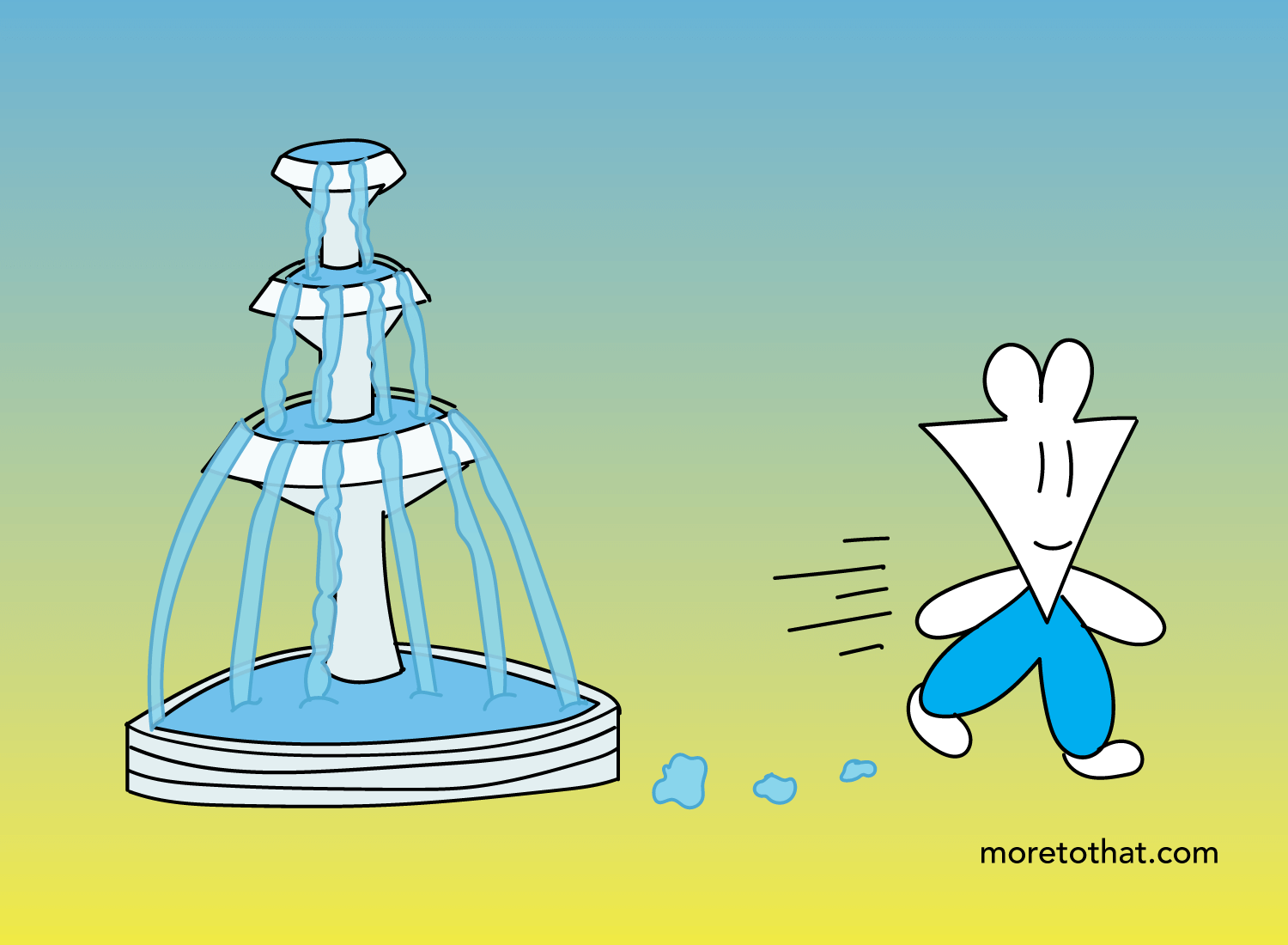
As I turn 40, I am also aware of the paradoxes of life. A big one is this: how much of my attention do I dedicate to breadth, and how much of it goes to depth? A meaningful life contains both, but one often comes at the expense of the other.
Generally speaking, breadth comes in the form of one’s career and work. Work is the domain where you make a wide impact, as the decisions you make and the way you actualize them will influence your colleagues, your students, your clients, your readers, etc. You provide value through your ability to solve problems, and that value will translate to impact and respect.
But depth is cultivated through relationships that are built outside the domain of your social value. My daughter loves me because I’m her dad, and not because I’ve created a popular blog. My (true) friends love me because I’m there for them in the same way they’re there for me. My parents love me because I’m their son, and that alone is sufficient.
In a perfect world, there is an unperturbed harmony between breadth and depth. But we do not live in such a world, which is why there are rich people with broken families and poor people with wholesome ones. Accomplishment may command respect but it cannot conjure love, and those that can’t see the difference will experience future regret.
As I turn 40, I’m more excited about my work than I’ve ever been. But at the same time, I’m more moved by my relationships than I’ve ever been. The other night, I had tears in my eyes as I looked at drawings that my daughter created of me and her holding hands. I thought to myself, Am I making the most of the time I have with her? And then moments later, I found myself thinking of different ways I could get the word out about my book. The desire for breadth is often found in the same thread of thought that understands the importance of depth.
The way I reconcile the two is to live in a way where one strengthens the other. For example, publishing this essay is my contribution to breadth, where people I don’t know will read these words. But writing this piece is a commitment to depth, as it’s making me reflect on my loved ones and just how important they are to my well-being. My work actually helps me be a more thoughtful and compassionate person, which has the benefit of making me be a better father, husband, son, brother, and friend.
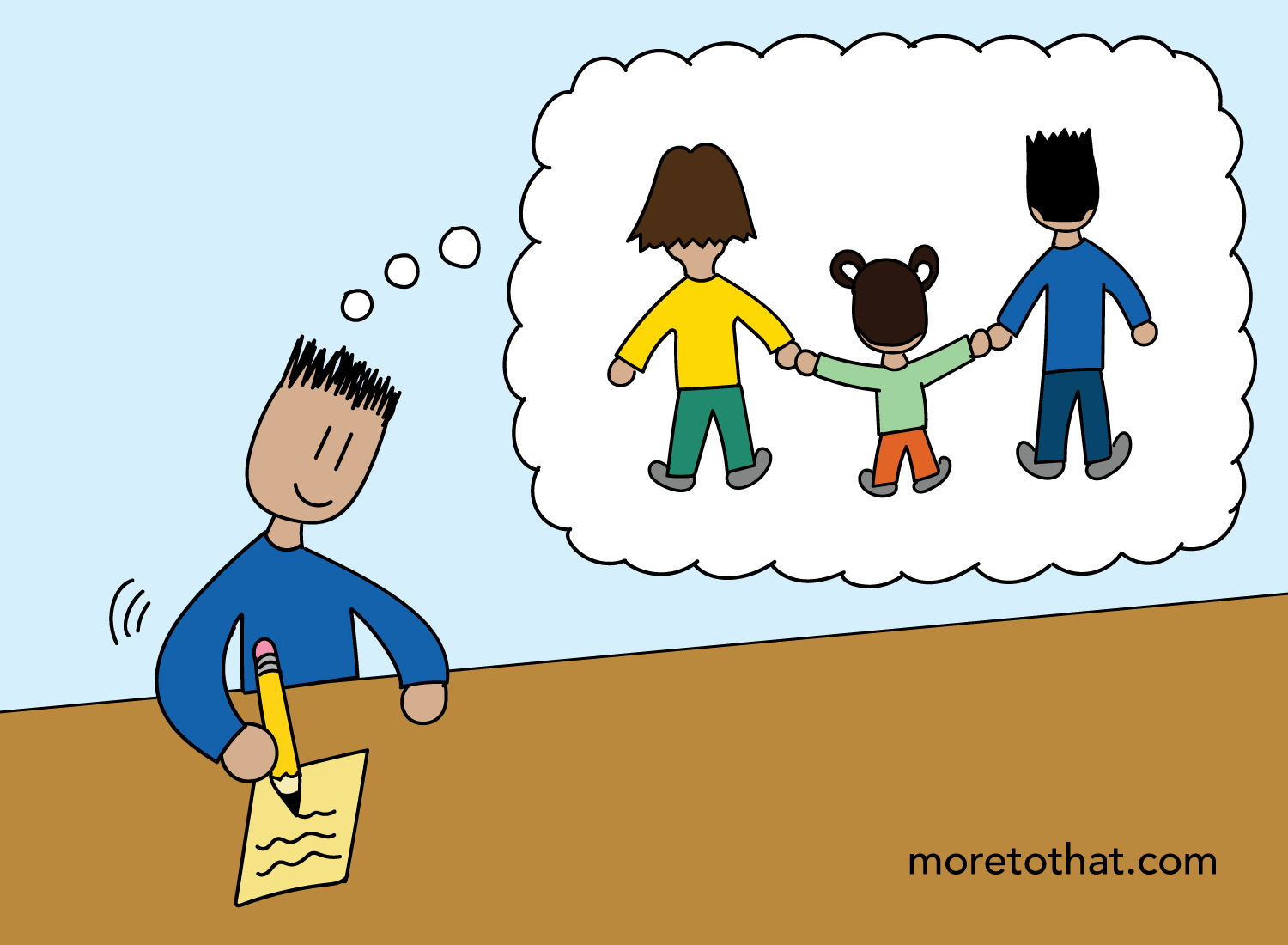
As I turn 40, I’m learning that the great paradoxes of life can’t be solved. Rather, you can only you do your best to align the opposing ends as much as possible. In this sense, perhaps I am still young. Maybe I still have a youthful ignorance around ambition given that I want to leave an impact on people’s lives. Maybe I have a naive belief that it will also make me a better loved one in turn.
But it’s just as possible that I believe all this because of the wisdom that comes with age. That due to all the lessons I’ve learned so far, I’m left with the conclusion that I have to operate on both wider and narrower scales to live a meaningful life. After sifting through all of society’s expectations, what remains is the great work I want to do coupled with the few people I want to be around. With this framing, it’s the passage of years and its resulting lessons that has led to timeless wisdom.
Since I feel both younger and older than 40, perhaps I’m exactly where I’m supposed to be. Too young to be satisfied with my pursuits, and too old to be wasteful with my time. The ability to see this clearly is a hallmark of turning 40, and that clarity is something well worth celebrating.
_______________

If you enjoyed this post, consider joining the More To That newsletter. You’ll be notified when a new post is up, and will get access to personal reflections that you won’t find anywhere else.
_______________
Related Posts
I’m coming to terms with the fact that this is the meaning of life:
A beautiful life is one where you get to choose the problems you want to solve:
Thankfully, Life Is Full of Problems
As you get older, it’s crucial to understand the difference between respect and love: