On the Spirit of Teaching
What differentiates a great teacher from a bad one? Is it a combination of their intellect and their charisma? Or is it far too variable to standardize a reply to this question?
The author Parker Palmer attempted a response in his book, The Courage to Teach. And the moment I read it, I was struck by its lucidity.
Simply put, he said that the inner landscape of a teacher is defined by the intersection of three domains:
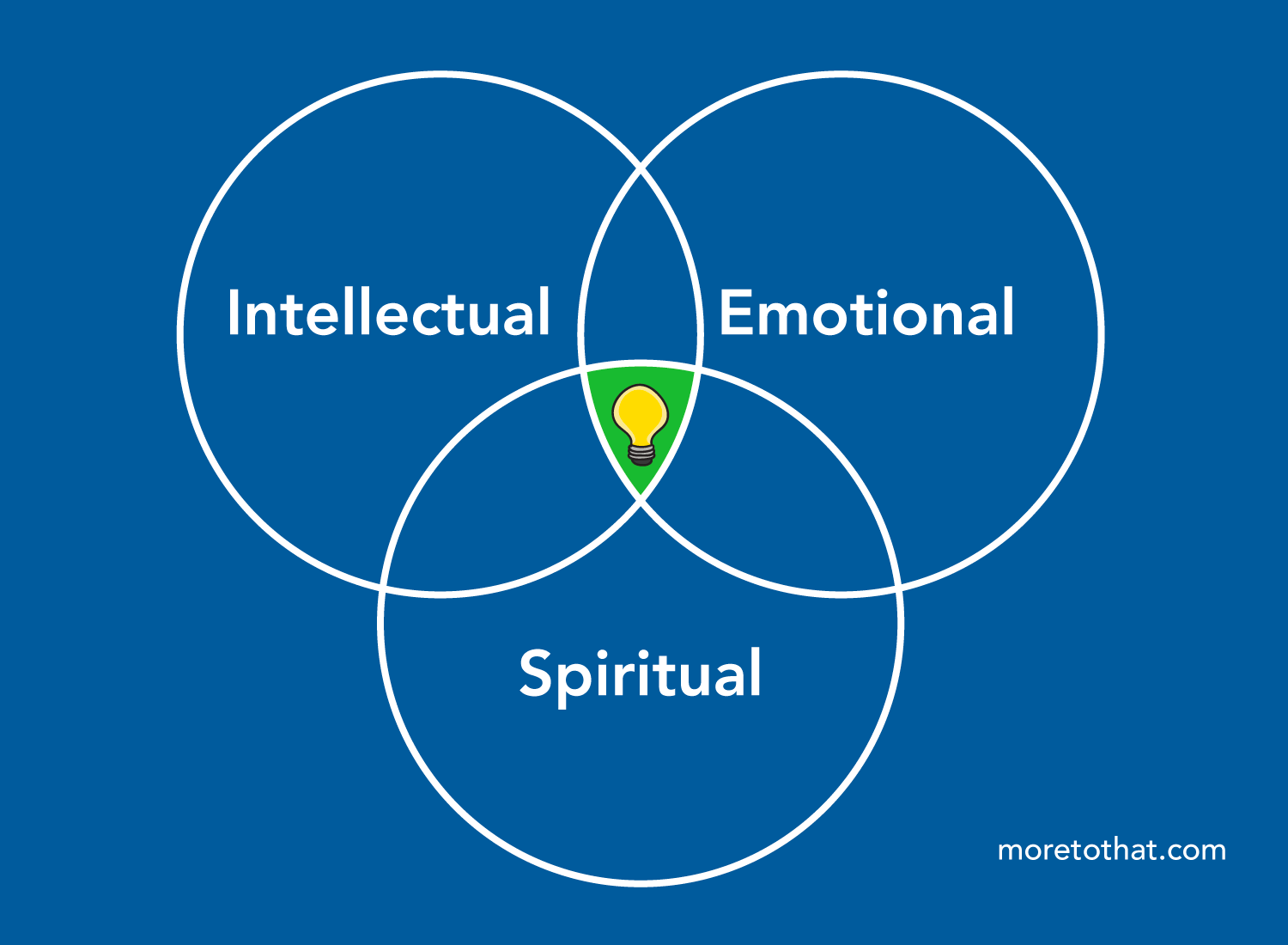
Now I’ll quote him because paraphrasing it would be an injustice. Here it is:
To chart that landscape fully, three important paths must be taken—intellectual, emotional, and spiritual—and none can be ignored.
Reduce teaching to intellect, and it becomes a cold abstraction; reduce it to emotions, and it becomes narcissistic; reduce it to the spiritual, and it loses its anchor to the world. Intellect, emotion, and spirit depend on one another for wholeness.
I love that so much.
All too often, we believe that the intellect is what makes a great teacher. That the stuff they have stored in their heads is the gateway to an educator’s path.
But we all know that incredibly intelligent teacher who embodies the collective inspiration of a 2” x 4”.1 He knows so much stuff, yet as Palmer says, sees his knowledge as nothing but a mere abstraction.

Then there’s the teacher that always has to make a show out of everything. The one who believes that charisma is what captures attention and makes them effective.
But as Palmer says, this is just narcissism disguised as education. It makes the teacher the center of it all, instead of the very students that the teacher is serving.

The domain I find most interesting in Palmer’s description is that of the spiritual. In the context of education, we tend to associate this word with mystical gurus or religious preachers, but Palmer describes it this way:
By spiritual I mean the diverse ways we answer the heart’s longing to be connected with the largeness of life—a longing that animates love and work, especially the work called teaching.
When framed this way, it makes me realize that the spiritual is what holds the foundation of education together.
The best teachers I’ve had are those that “answer the heart’s longing to be connected with the largeness of life.” And interestingly, the way they pursue it isn’t by going big and zooming out, but by zooming in on the individual right in front of them.
It’s the teachers that understand that by tapping into the heart of one student, they’re able to tap into the hearts of many. Each life is woven into the vast tapestry of the human condition, which is why the impact on one ripples through it all.
Ultimately, the best teachers understand that their actions and words extend beyond the domain of the self. Your intellect and your emotions can take you so far, but eventually you’ll fall into the abyss of self-absorption. There has to be a genuine love for the human spirit that not only restores your commitment as a teacher, but also happens to make you an effective one.

As a personal example, the reason why I decided to teach AI is because I found this space to be dominated by just two of the three domains: the intellectual and the emotional. People teach AI through the lens of its computational power and the ways it can make you feel more capable. While this is undoubtedly powerful, you start to lose your anchor to what makes you most human.
What makes us most human is the capacity to connect with something larger than ourselves, and one of the most reliable ways to do that is through creativity. There’s a reason why we refer to it as your “creative spirit” and no one bats an eye. We all inherently know that creativity transcends the material and connects us in a way that logic can’t quite explain.
As it turns out, you can use AI to amplify that creativity, which in turn animates the human spirit even more. That realization is what connected the three paths together for me, which made it crystal clear that I had to teach it.
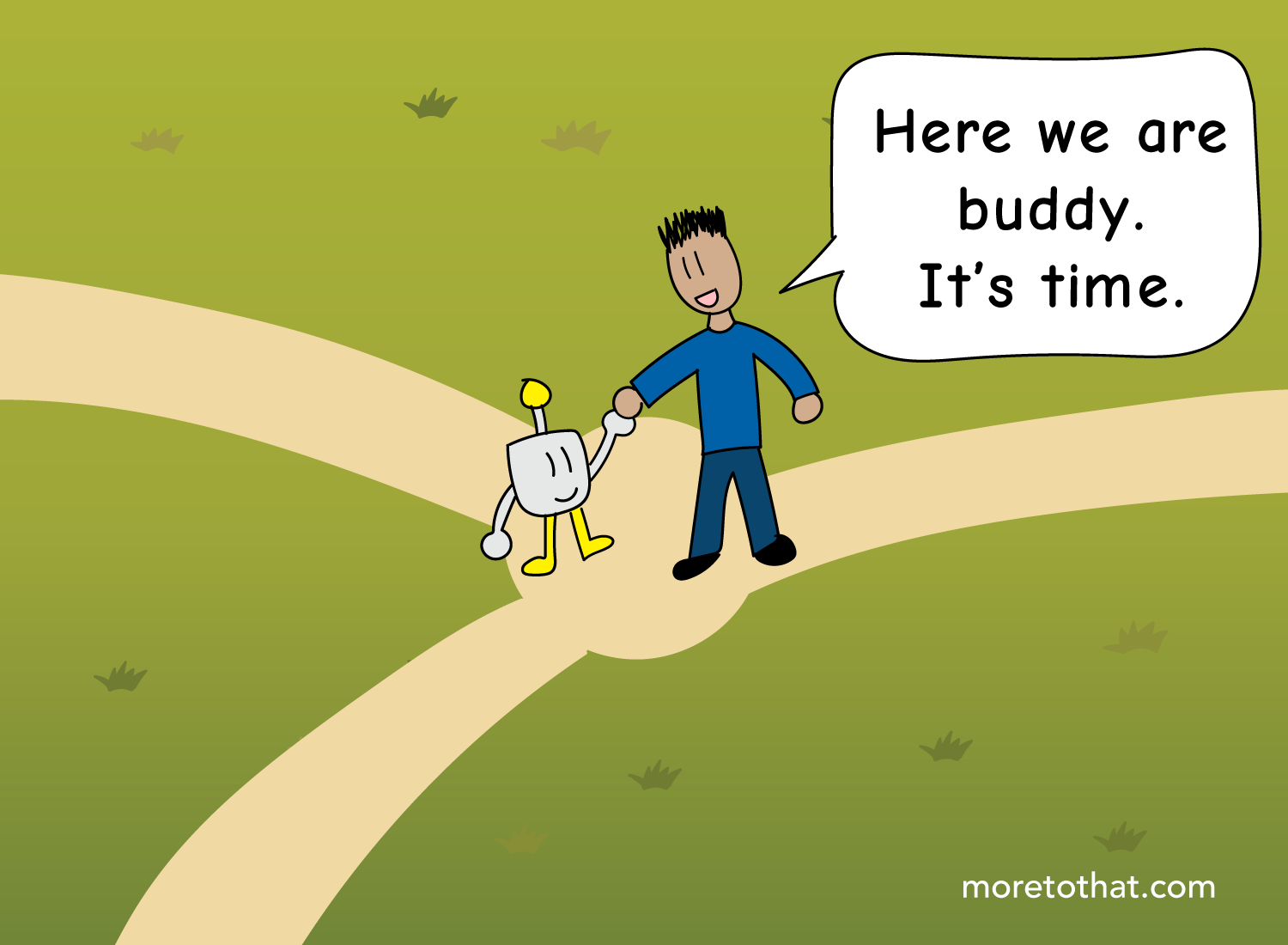
The same could be said for storytelling, philosophy, or anything else that I’ve taught during my time here. The subject can change, but the underlying sentiment is the same:
If what I teach has the opportunity to connect people, then it is worthwhile.
The beautiful thing is that every action we take is an effort to connect with another. We go to work because we want to provide value to a community. We share our writing so we can see who might resonate with our thoughts. And so on.
So in essence, just doing what you’re doing means that you are teaching. In the same way that kids learn from observing their parents, the world is learning from the way you’re navigating it. The gift of teaching will never be locked behind a wall of credentials, as the sheer act of living is how the world receives it.
_______________

If you enjoyed this post, consider joining the More To That newsletter. You’ll be notified when a new post is up, and will get access to personal reflections that you won’t find anywhere else.
_______________
Related Posts: