Intuition and the Inner Compass
Let’s start by defining what intuition is.
Some say that it’s a gut feeling that validates a decision. Others think of it as an alarm that alerts you of potential mishaps. And in some circles, it might be described as a divine force that guides you toward truth.
Regardless of which framing you use, there is utility in each one. That’s because we all recognize that the world is unpredictable, yet we still have to navigate it with confidence. If you want to make the most of life, you have to lean into it instead of shrinking from it, and that is only made possible through a belief that you can handle the unknown.
Intuition is the inner wisdom that welcomes uncertainty. It understands that you can’t know everything, but what you know about yourself will make up for that gap. And by trusting your resolve, you’re able to frame the unknown in a way that serves you.
To illustrate this dynamic, let’s consider the three main factors that will have an outsized impact on your life:
1. Where you live,
2. What you work on, and
3. Who you’re with.
You can get many things wrong, but if you get the above three right, your well-being will be high. So for something this important, you might assume that rationality will be the beacon that guides you toward the answer. Perhaps you’ll do a ton of research, make a list of various factors, and make your decisions based on a careful weighing of your options.
What you’ll find, however, is that a pros and cons list can only take you so far. What looks good on paper may feel off in spirit, and the inverse is also true. For example, a job offer that checks all the boxes can still feel like it’s the wrong one. Or a date that doesn’t satisfy your initial criteria can later feel like the right partner. There is a limit as to how far your rationality can take you, and it’s not as far as you might think.
Intuition is what takes you from the limits of logic to the decision you ultimately make. No matter how rigorously you apply reason to reduce uncertainty, there will always be a great level of uncertainty you have to accept. Your intuition is what helps you make that jump, knowing that this specific texture of the unknown is a worthwhile challenge to navigate. You can’t predict what a big move or a career change will yield, but your intuition instills the confidence required to welcome whatever does.
One way to imagine intuition at work is in the form of an inner compass we all have:
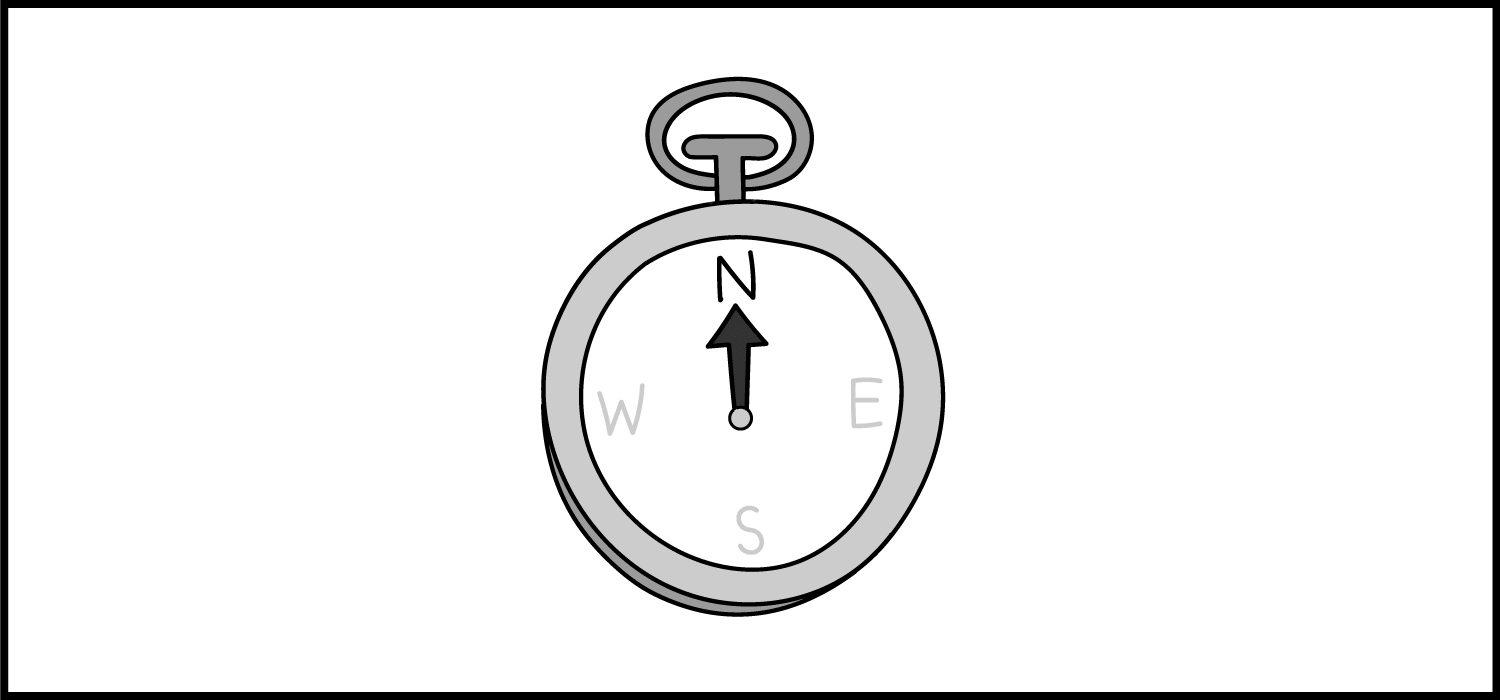
Every inner compass starts at true north, which is the state of trusting ourselves. This is because we are all born with the gift of presence (as discussed in Chapter 2), which is when your inner state is in alignment with your external surroundings. There’s no worry or fear when you’re present because you’re content with what simply is. This is why children are fully attentive to whatever is in front of them, and why adults feel time dissolve when we’re in a state of flow. We are all capable of feeling this because this very state is the origin of our minds.
When your compass is at true north, you have conviction in who you are. You’re aware that uncertainty is inevitable, but it’s a source of empowerment rather than fear. The fact that you can’t predict what happens next is seen as a feature of life, and not a bug. After all, if everything was knowable, there would be no room for curiosity to emerge. Curiosity is being grateful that there’s more to uncover, which is what drives the conviction to explore.
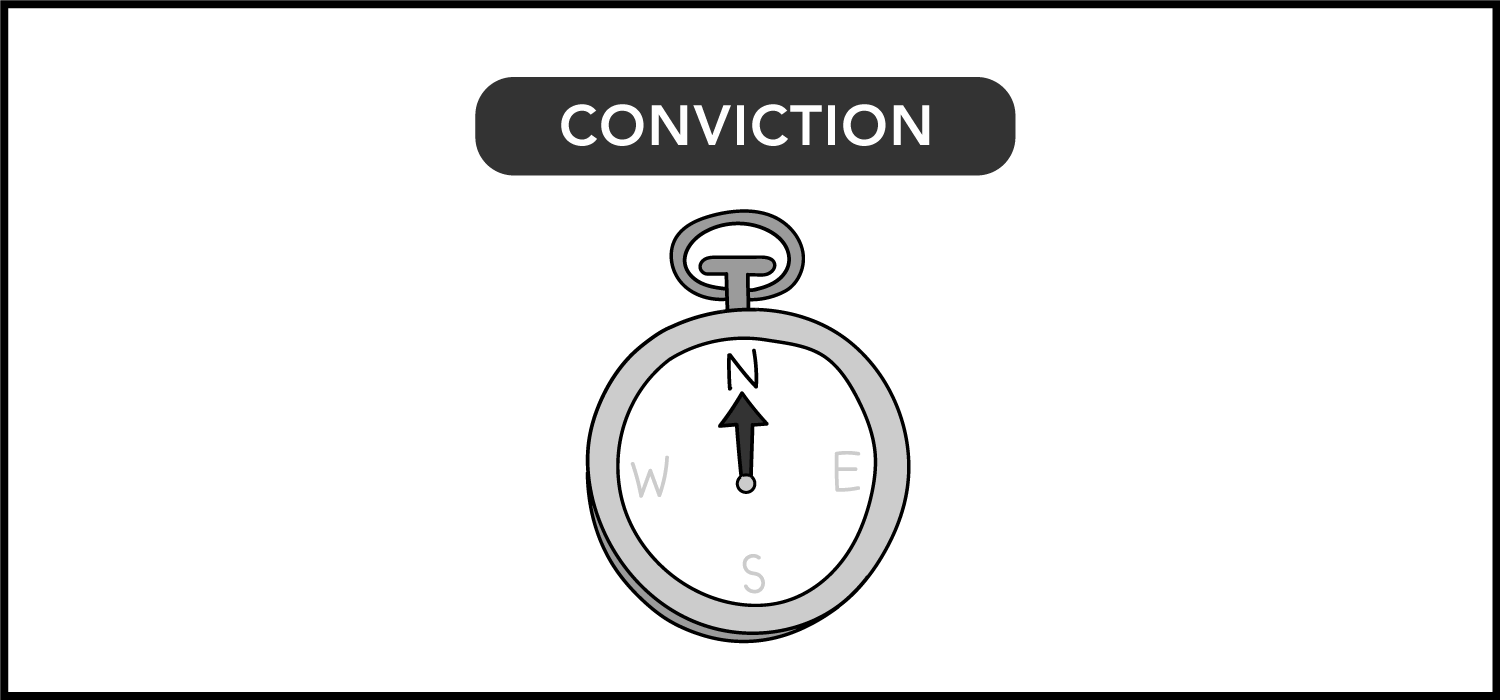
Now, if our inner compasses stayed here, we would all be doing what is aligned with our sense of purpose. But as we all know, there are many forces that prevent us from doing just that.
What disturbs this alignment are the winds of conditioning. This is when the external voices promising security, safety, and status direct us to a path that is not our own, which ultimately leads to suffering. Conditioning takes many forms, but in the context of the inner compass, any force that pulls you away from true north falls under its reach.
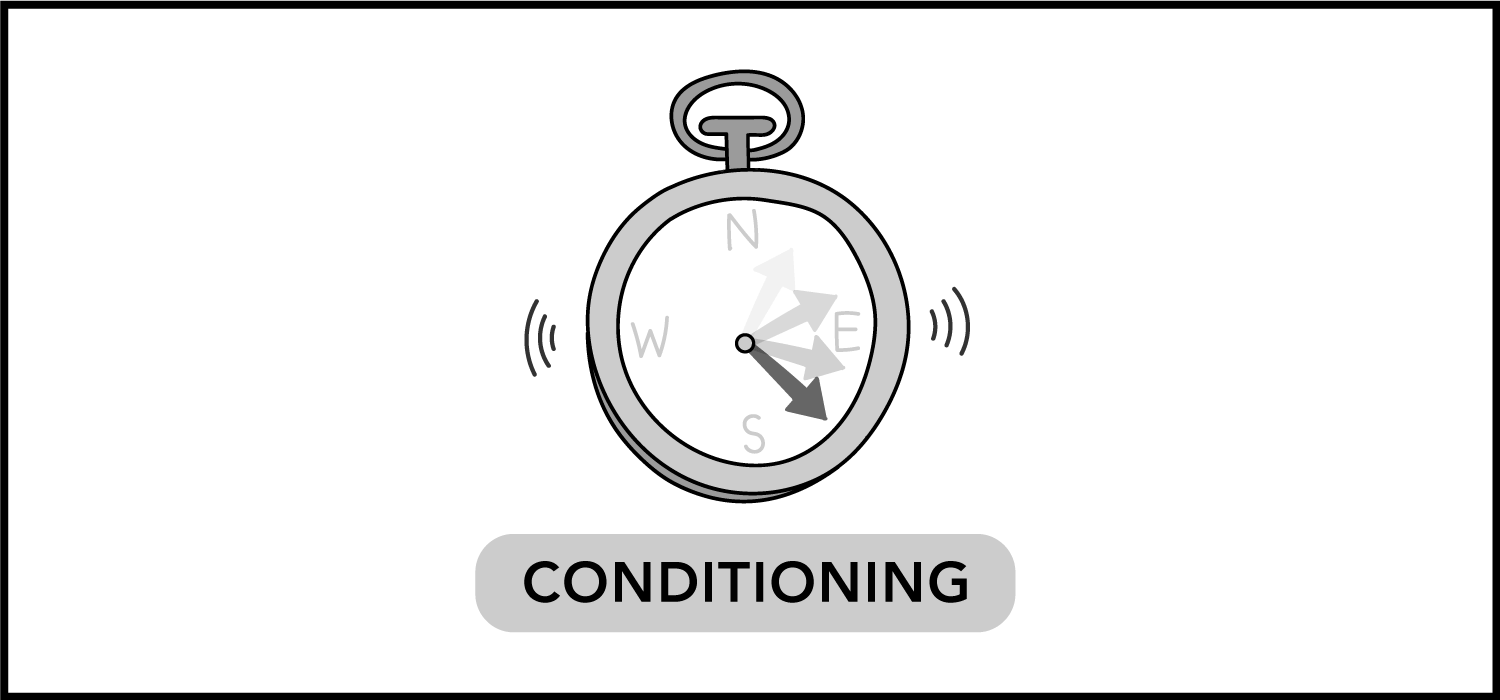
Anytime you think you “should” do something, that’s conditioning. Anytime you compare yourself to another, that’s conditioning. Anything that causes fear or worry to arise is conditioning, as peace is disturbed only when you have an expectation that lies beyond the present moment.
The great thing about your inner compass, however, is that it does a great job alerting you of when these winds are pulling you away from true north. And the way it does that is through the avenue of your physiology.
This may sound a bit esoteric, so I’ll take a moment to explain.
Let’s say that you’re working at a job you find meaningful. You’re solving problems you care about with people you care for, and this creates an atmosphere of purpose. The only gripe is that the pay could be higher, but you recognize that it’s enough for your needs.
Now let’s say that a recruiter approaches you for another job, which will effectively double your pay. The tradeoff, however, is that you’ll have to take up more managerial responsibilities, which don’t align with your inherent interests. What you give up in agency will be made whole through money, and that is the state of the offer.
Upon learning about this opportunity, you’ll likely feel a tension arise somewhere in your body. Some common areas are the chest, stomach, or forehead, but it’s a familiar area where tensions of this kind arise. You may initially interpret it as anxiety or stress, but what’s really happening is that your inner compass is alerting you of a pull away from true north (in some cases, it feels like a literal pull on your body). It’s telling you that the winds of conditioning are strong, and that there’s a chance you may go against your intuition as a result.
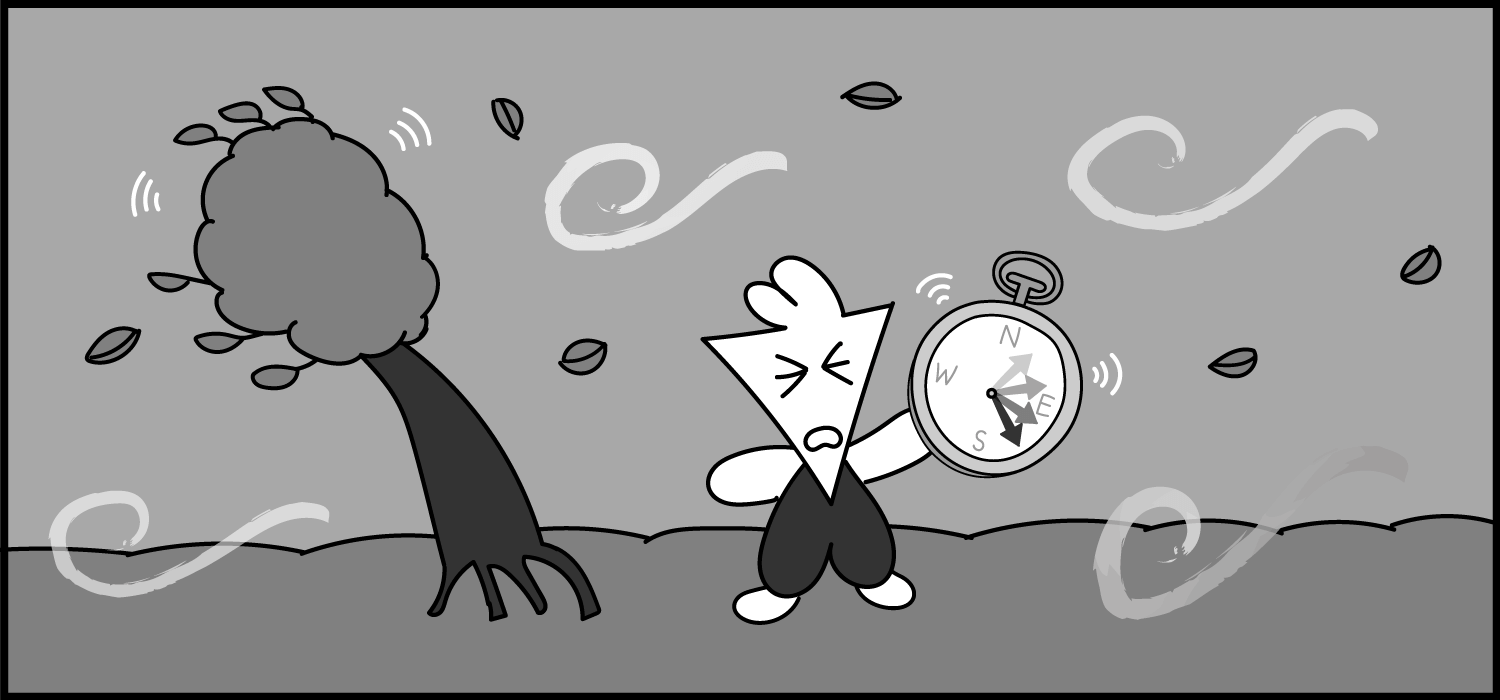
If you were already doing meaningful work and making enough money, then your inner compass is asking you why you’d want the other opportunity. More money is great, but is it worth a misalignment in your interests? If you’re feeling challenged in all the right ways, why are you trading that away for a certainty you don’t care much for? At the center of all this is the allure for something external, which manifests in the form of expectations of what you “should” do.
It was once believed that mind and body were separate entities (an idea known as dualism), but both neuroscience and philosophy have converged to show that they are closely interlinked. The inner compass is one way of illustrating just how connected these two realms are, and in this case, how a conflict within the mind manifests as a pressure in the body. This reveals a fundamental truth about how the inner landscape works:
When you are conditioned, every action feels tense. But when you have conviction, every action feels fluid.
The Daoists have a concept called wu-wei, which roughly translates to “effortless action.” It recognizes that we have to act within this world, but that we can do so in a way that harmonizes with its natural order. Instead of controlling our way through existence, we can locate its seams and ride alongside them.
This is what having conviction feels like. When you trust your intuition, you recognize your innate capabilities and see all the ways in which they fit within the world. There is an alignment between who you are and what you offer, so you develop the confidence to lean into what makes you unique.
Conditioning, on the other hand, is filled with tension because you’re constantly trying to insert yourself into unwelcoming terrain. Instead of leaning into your innate curiosities, you shrink away from them and mold yourself according to the preferences of others. And in doing so, you open the floodgates of suffering because this terrain is where fear, envy, and competition reside.
Ultimately, every endeavor comes down to two options. You can either choose conviction, or choose conditioning. You can follow your true north, or be swayed by external winds. You can choose what you must do, or what you should do.
This is what the inner compass helps you calibrate throughout your days.
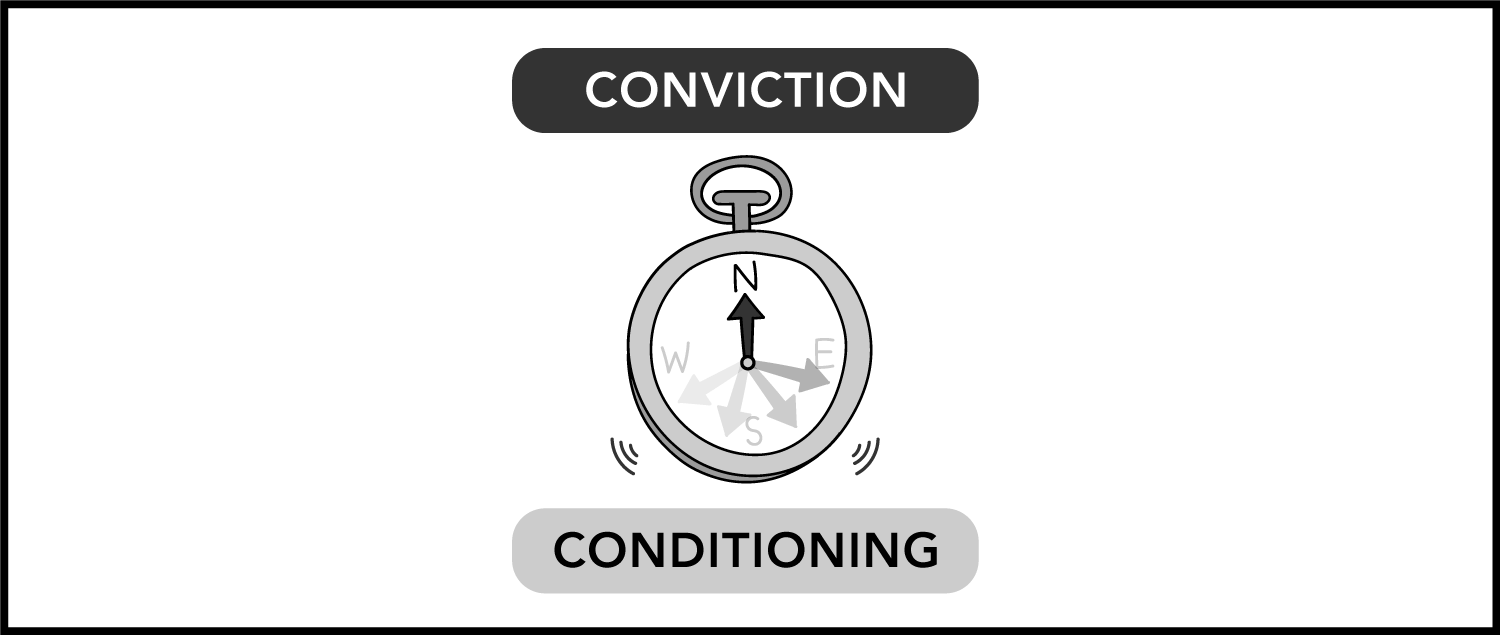
When you see life as a choice between conviction and conditioning, there is a clarity that accompanies that lens. You see how every pursuit has two clear endpoints depending on which path you choose.
To illustrate this, here’s how the inner compass is delineated in four meaningful domains:
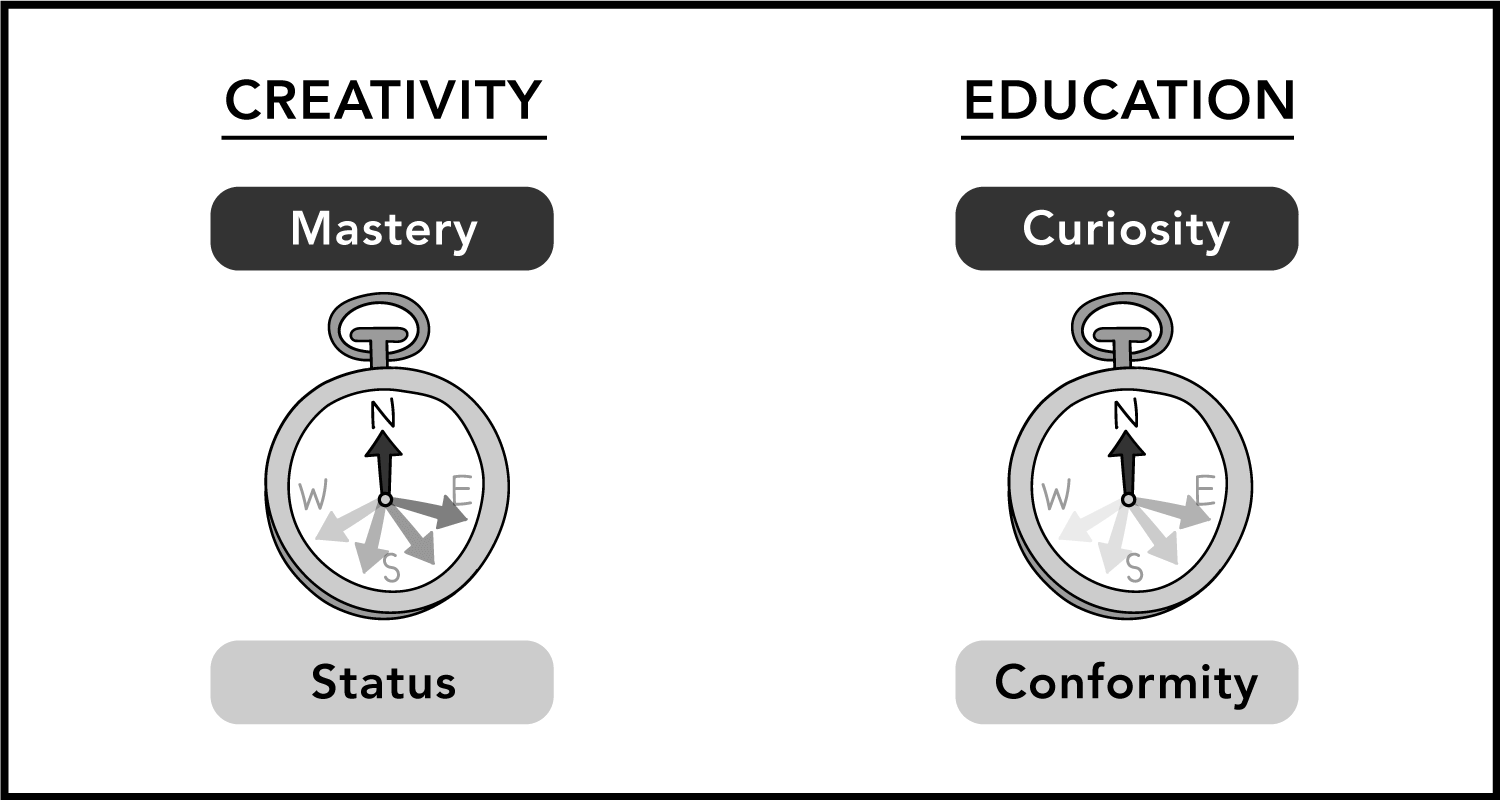
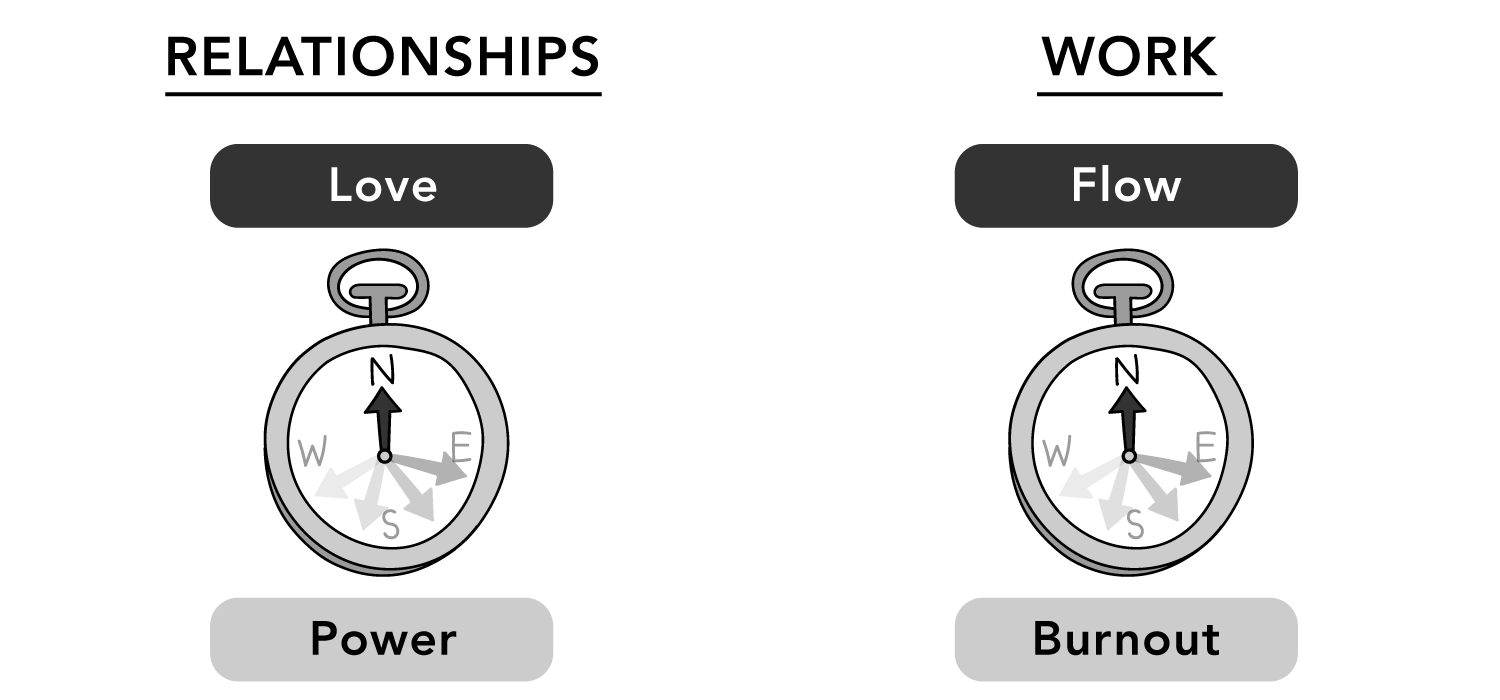
We will go into some of these domains later in the book, but you can immediately see the difference between trusting your intuition and denying it. True north points to the heights of what we have to offer, while conditioning caters to the lowest of our impulses.
With that said, a common objection to the above is the following:
“Wait, but what if your intuition is faulty? If you trust something that is flawed, won’t that just lead to bad outcomes?”
It’s a good question, and one that we’ll go over in the next chapter. And in doing so, we’ll explore why the pursuit of self-understanding is the most worthwhile of them all.
_______________

If you enjoyed this post, consider joining the More To That newsletter. You’ll be notified when a new post is up, and will get access to personal reflections that you won’t find anywhere else.
_______________
Related Posts: